
(excerpt from Am I Literate? Redefining Literacy in the Age of AI)
In my first semester at university, I stumbled into a paid gig writing university papers for students. It was more like gig work before gig work was a thing, and it suited me just fine. I had a hunger for knowledge, a need for cash, and an independent lifestyle to sustain. Living alone, paying rent, and attending university while saving for summers abroad made this work a practical solution. School loans only stretched so far, and the last thing I wanted was to return to the suburbs, where the family home was located. So, writing course papers became my job. While I aimed to work closely with students to help them develop the skills to author their own papers, the work was completely against the rules—a thought that did not even occur to me at the time. I took on requests through referrals from any student, as long as the assignments were in the social sciences. I was soon writing on topics ranging from fashion to political science to psychology. Each paper was a great learning experience, a way of dipping my toe into each field and getting a glimpse into many different subjects.
Being able to absorb and distil large amounts of information quickly helped move work along, and with my terrible memory, I was grateful that there was no need to remember any information. What I enjoyed the most was working with the students to understand their voices and tones, guiding them to improve their writing so they would no longer need my support. In hindsight, this was not the best business model for longevity, but it aligned with my short-term goals: paying my bills, doing something I enjoyed, and helping people. Most of the students I worked with were from Taiwan, new to North America, and eager to spend time exploring the city rather than being buried in coursework.
It all started with one person who also became a good friend. Faith, from a wealthy family in Taipei, had moved to Canada to study English literature, with a dream of one day becoming an author. She came from a conservative upbringing in a male-dominated culture, and after losing her mother to illness, she felt a strong need to explore the world. She had imagined so much about life outside Taiwan, reading about far-off places in stories, that she felt it was now time for her to discover new experiences in the real world. When she had the opportunity to study abroad, she jumped at the chance.
We first met in the university cafeteria. Faith approached me while I was reading a book. Flustered, she explained her problem: she had an essay due the next day but had not started. The project was on The Water Babies, a Victorian fairy tale by Charles Kingsley. I was familiar with the book, having read it many times as a child. Beneath its whimsical narrative lay sharp critiques of child labour and the rigid scientific conservatism that arose in response to Darwin’s theories on evolution. Kingsley’s writing was not only a form of artistic expression but also an important record of the social and moral upheavals of his time. Through storytelling, he highlighted the harsh realities of the Industrial Revolution, capturing the widespread exploitation of children in factories and the moral dilemmas posed by rapid industrial progress. His work gave voice to the voiceless and exposed the growing divide between social classes, exposing readers to the actual cost of progress.
The book, particularly its social message, was one I could easily reconnect with. Confident in my ability to support Faith, I offered to draft an outline. However, her next request was unexpected: she asked if I would write the whole essay—for a fee that, at the time, felt like a windfall. Half a month’s rent was impossible to refuse. That ‘yes’ marked my first paid assignment. The paper received a high grade, sparking a cascade of similar requests from her and other Taiwanese students, and over time our working relationship turned into a friendship.
Although Faith was an avid reader of English literature, she needed help with her writing. We met twice a week at a Taiwanese tea shop in downtown Montreal, where I tutored her in English, and she introduced me to bubble tea and other Taiwanese treats. These one-hour sessions turned into afternoons of conversation about life. She shared family stories and recipes, and I shared my experiences living in England and abroad. Literature became our starting point for conversation and helped build a bridge between our cultures. Faith’s passion for literature was palpable, her eyes sparkling when reciting poems or discussing her favourite authors. Yet, balancing her ambitions with her family’s expectations was difficult. Academic underperformance was not tolerated back home, and the pressure to excel weighed heavily. Unlike my upbringing, where encouragement came as “Do your best,” Faith faced a reality where she had no choice but to overcome her weaknesses through relentless effort.
After a year of consistent tutoring and dedication, Faith’s writing improved dramatically. While she was now receiving good grades in English Literature, she never neglected enrolling in courses that tapped into her natural strengths. Every elective course she registered for involved math, no matter how challenging or unrelated to her primary interests. Her talent in math was extraordinary; she scored 100% on every exam, rarely attending class, and never opened a book to study. When I asked how she managed to achieve such results, she attributed it to her upbringing in the Taiwanese education system—and her parents.
“In Taiwan, we learn math as intuitively as we learn to read and write,” she said. “Numbers are just like words, used as an expression to explain patterns and solve problems.” She explained that she was taught math as a language, and in Chinese, there is a simple, logical number system—11 is ‘ten-one’—making arithmetic easier to grasp. She could read and understand a mathematical equation just as easily as she could read a sentence.
Faith described how her education emphasised understanding problems first and then applying mathematical concepts to solve them. She came from an environment that not only valued but enforced persistence, discipline, and the belief that success came through intense effort, starting at an early age. It was a process that mirrored her methodical approach to mastering English.
I was fascinated and in awe. Just like my mother, Faith would often say with a grin, “Practice makes perfect,” and I knew they were both right. I had witnessed Faith’s tireless effort to write the best English papers. Having spent so much time with her and seeing her progress, I learnt from her and began to see math through a similar lens as writing—both tools for communication and self-expression, meant to help us explore and understand the world around us.
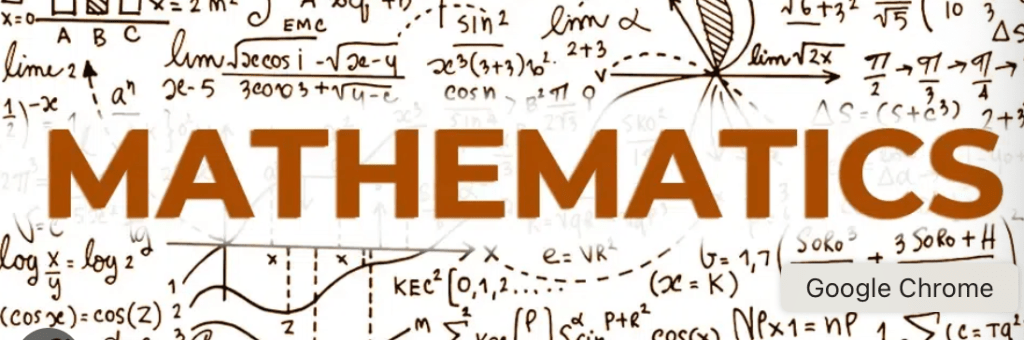
Mathematics. To some, it evokes a great deal of stress and causes confusion. To others, like the Italian astronomer and physicist Galileo Galilei, it provides clarity, offering the key to understanding the language of the universe. As Galileo once said:
Philosophy is written in this grand book—I mean the universe—which stands continually open to our gaze. However, it cannot be understood unless one first learns to comprehend the language and interpret the characters it is written. It is written in the language of mathematics. Its characters are triangles, circles, and other geometric figures, without which it is humanly impossible to understand a single word of it; without these, one is wandering about in a dark labyrinth.
At its heart, mathematics is the study of patterns, and analysing patterns allows us to perceive hidden connections and find beauty, such as in the Fibonacci sequence in flower petals or seashell spirals. It goes beyond theoretical exploration, providing a framework for understanding relationships between objects, phenomena, and ideas. This enables scientists, engineers, and thinkers to predict and manipulate the forces shaping our world, whether calculating a rocket’s trajectory or estimating a population’s growth. Through it, we find order in chaos, equipping us to handle uncertainties through probability and helping us make informed decisions and assess risks. It drives innovation by developing rigorous proofs, solving problems, and creating new theories. Spanning such topics as arithmetic, algebra, geometry, calculus, and statistics, math underpins scientific discovery and technological advancement.
If the acts of talking, reading, and writing are ways humans communicate with each other, then mathematics can be seen as a skill to communicate with the universe—and now with technology. It transcends cultures, continents, and disciplines as a universal language and has the promise to unlock the universe’s secrets, from distant galaxies to the tiniest particles. Mathematics can be considered a language—a communication system with its own vocabulary, grammar, and syntax—requiring an understanding of its rules to interact with it effectively. It is also a tool for structured communication, transforming raw data into actionable insights and bridging abstract ideas with tangible outcomes. It is more than equations and formulas—it is a powerful tool that can help navigate a path in times of uncertainty and change.
In The Meaning of Proofs: Mathematics as Storytelling, author Gabriele Lolli draws a compelling parallel between mathematical proofs—deductive arguments for a mathematical statement—and storytelling. He writes:
Just as fairy tales offer a narrative structure in which new characters can be inserted into recurring genre forms in original ways, in mathematics, each new abstract concept is the protagonist of a different theory supported by the general mathematical reasoning techniques. […] The minute mathematicians open their mouths to explain something—the meaning of x, how to find y—they frame a narrative. Mathematics is not the mere manipulation of formulas.
Much like a story, mathematics builds worlds from structure and relationships, and like all languages, it has developed and taken shape over time. Physical evidence of its existence dates back 43,000 years, with the Lebombo bone—a notched baboon leg considered the first mathematical object in the world. The bone’s 29 notches suggest it may have been used as a lunar phase counter. If this is true, African women may have been the first mathematicians, tracking menstrual cycles aligned with the lunar calendar—a profound example of mathematics arising from practical needs and the natural world.
If I had learned this in my grade seven math class, my engagement and interest in calculations might have been entirely different.
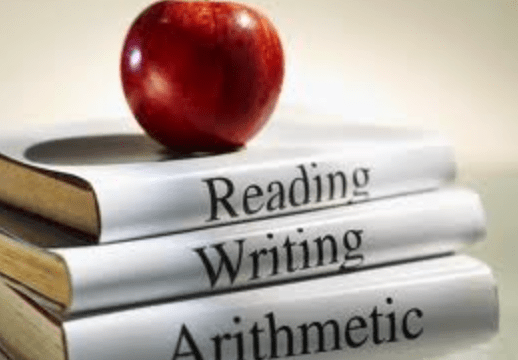
(image: wccc.ie/literacy-numeracy)
Numeracy as Literacy
Numeracy and mathematics are closely related, but they are not the same. The terms ‘numeracy’ and ‘numerate’ are often overshadowed by ‘mathematics’ or ‘understanding math.’ While it is a term with many different definitions, depending on which country or organisation is defining it, in its simplest, numeracy is the ability to use numbers in the real world. To be numerate is to understand when and how to use numerical information effectively in various situations.
While numeracy includes aspects of mathematics, it focuses more on the practical use of numbers rather than abstract or theoretical concepts. According to a report by the Australian Association of Mathematics Teachers, being numerate involves starting from a real-world problem, identifying the mathematical aspects, and framing them as a solvable mathematical problem, acting as a bridge between mathematical concepts and their applications in daily life. There is a similarity to how Faith learned to use numbers in her learning journey in Taiwan.
Strong numeracy skills empower individuals to make informed decisions, solve problems, and engage fully in society. Numeracy is more than just working with numbers – it involves understanding and applying both quantitative information and spatial information. Quantitative information refers to measurable data expressed as amounts, such as using numbers in real-life situations. Spatial information relates to the physical location and relationships between objects, like deciding direction or navigating spaces. Each day, we encounter both types of information, and by becoming numerate, we are able to interpret the world around us. As we become more independent and engaged in our communities, our ability to navigate with numbers evolves. For example, young children develop numeracy by deciding how many friends to invite to a birthday party or by completing a puzzle they received as a present. Older children use it to estimate the cost of a chocolate bar or timing when recess will begin. Young adults rely on numeracy to track their budget, or plan when the bus will arrive at the stop. Adults apply it to compare costs at the grocery store, negotiate a mortgage rate, or organise a family trip. Numeracy equips individuals with the skills needed to manage personal finances, plan for the future, and understand economic systems. It includes having the knowledge, skills, and confidence to make responsible financial decisions, which can contribute to reducing inequalities and uplift communities. Being able to abstract information from data and use it to make informed decisions is the skill of transferring data into knowledge.
As philosopher Francis Bacon once said about the potential to empower individuals and societies: “Knowledge is power,” and with numeracy skills, people are equipped to handle tasks essential for economic independence and personal well-being.
AI & Math
Mathematics is essential for understanding the mechanics behind AI systems. It provides the foundation for representing data, optimising processes, and making decisions under uncertainty. Developing these skills starts with basic numeracy and progresses to more advanced areas such as linear algebra, calculus, probability, and statistics.
Linear algebra is crucial for handling data in AI, particularly when working with high-dimensional datasets like images or text. Vectors and matrices allow AI systems to process and manipulate large volumes of information efficiently. Calculus is key for optimisation, helping AI models improve over time by adjusting their parameters to reduce errors or enhance predictions. Derivatives also play a central role in training algorithms, especially in processes used in deep learning.
Probability and statistics are concepts that help manage uncertainty and make informed predictions. Probability helps AI systems estimate the likelihood of different outcomes, which is needed for tasks like natural language processing or decision-making. Statistics allows for analysing and interpreting data, so that AI models can generalise from past experiences and make accurate predictions in new situations.
Encouraging a love of mathematics, across all disciplines, genders, and cultural backgrounds, makes sure that there are diverse perspectives included in AI development. The broader the understanding of mathematics, the richer the potential for innovative, inclusive, and fair AI systems.
As I learned while helping Faith master English, we need guidance, practice, and open curiosity to learn subjects that don’t come naturally. Math and numeracy, like the essays we worked on together, is a language, a form of literacy that opens doors: to knowledge, to innovation, and to fully participating in a world increasingly powered by AI.
Sources
Kingsley, Charles, and Jessie W. Smith. n.d. “The Water-Babies.” Wikipedia. Accessed November 25, 2024. en.wikipedia.org/wiki/The_Water-Babies.
Walters, Sam. 2023. “Yes, Galileo Actually Said That.” Discover Magazine. http://www.discovermagazine.com/the-sciences/yes-galileo-actually-
said-that.
Imagination Station. 2021. “The Fibonacci Sequence.” Imagination Station. http://www.imaginationstationtoledo.org/about/blog/the-fibonacci-
sequence.
Helmenstine PhD, Anne Marie. 2019. “Why Mathematics Is a Language.” ThoughtCo. http://www.thoughtco.com/why-mathematics-is-a-language-4158142.
Lolli. 2022. “The Meaning of Proofs – Mathematics as Storytelling.” MIT Press. mitpress.mit.edu/9780262544269/the-meaning-of-proofsHistory of Information. 2024. “The Lebombo Bone.” History of Information. http://www.historyofinformation.com/detail.php?id=1976.
“Critical Connections Between Numeracy and Mathematics.” n.d. ACER Research Repository. Accessed January 17, 2025. research.acer.edu.au
Alberta Education. 2024. “What is numeracy.” Alberta Education.
education.alberta.ca/literacy-and-numeracy/numeracy/everyone/what-
is-numeracy.
Government of Canada. 2024. “Financial Literacy.” Government of Canada. http://www.canada.ca/en/financial-consumer-agency/programs/financial-
literacy/financial-literacy-history.Panovski, Antonio. 2023. “What Did Francis Bacon Mean by “Knowledge Is Power”?” TheCollector. http://www.thecollector.com/francis-bacon-knowledge-
is-power.

Leave a comment